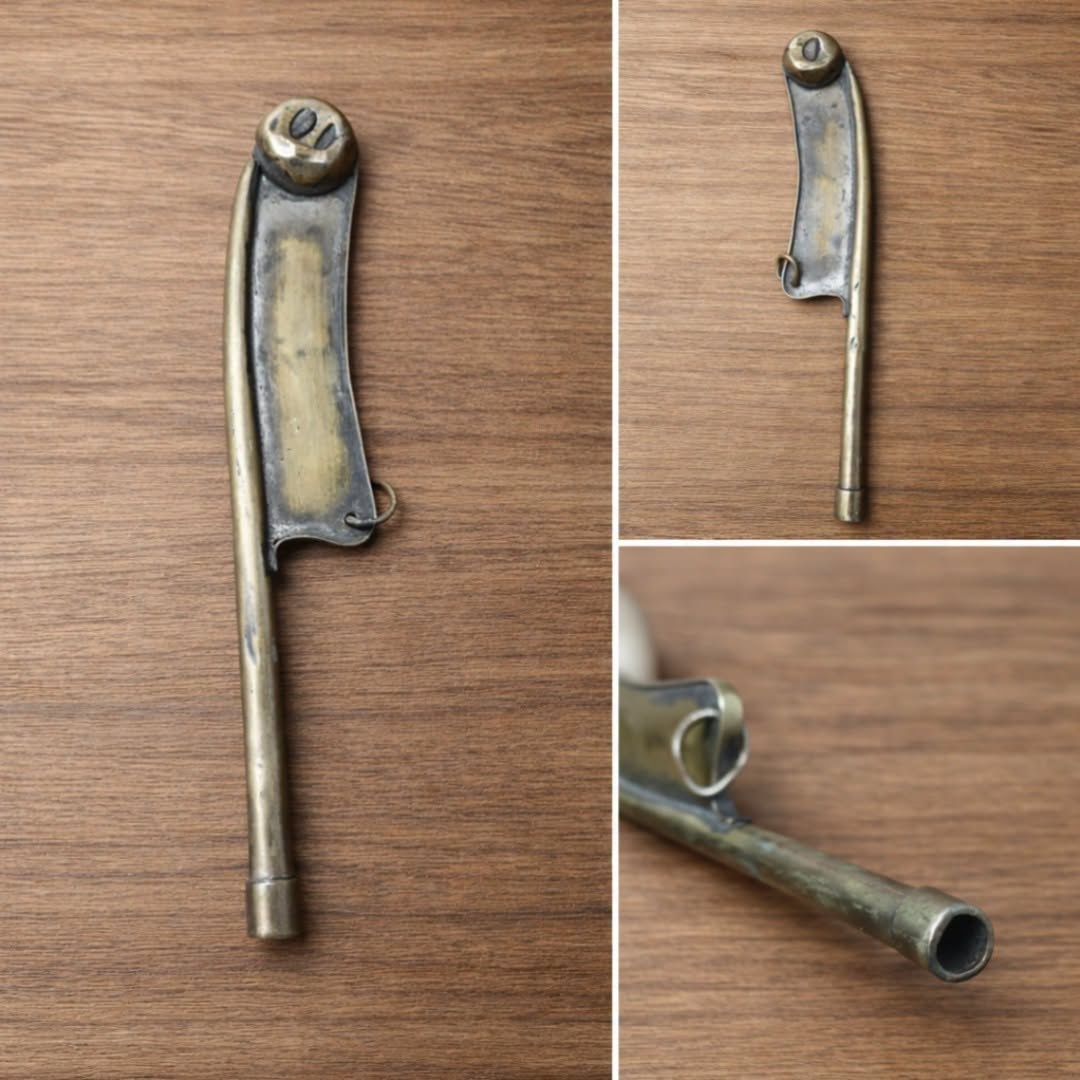

At first glance, this unusual metal object might look like an antique ornament or a miniature musical instrument. In reality, it’s a boatswain’s call—also known as a bosun’s whistle—a small but essential tool that helped sailors communicate aboard ships for centuries before radios existed.
The boatswain’s call was carried by the ship’s boatswain, an officer responsible for supervising the crew and overseeing daily operations. Instead of shouting commands across noisy decks filled with crashing waves and strong winds, the boatswain used this whistle to produce clear, high-pitched signals that could be heard throughout the vessel. Different tones and patterns conveyed specific instructions, from calling sailors to work to marking important ceremonies.
Its clever design included a narrow mouthpiece, a rounded sound chamber, and a curved body that allowed skilled users to create multiple notes by adjusting their breath and hand position. Despite its simple appearance, it became one of the most reliable communication tools during the age of sailing ships.
Today, boatswain’s calls are prized by collectors, maritime museums, and naval enthusiasts. Sterling silver examples, especially those with identifiable maker’s marks, are particularly sought after for their craftsmanship and historical value.
Although modern ships rely on advanced communication systems, the boatswain’s call remains a lasting symbol of maritime tradition, reminding us how a small, carefully designed instrument once helped crews work together safely on the open sea.