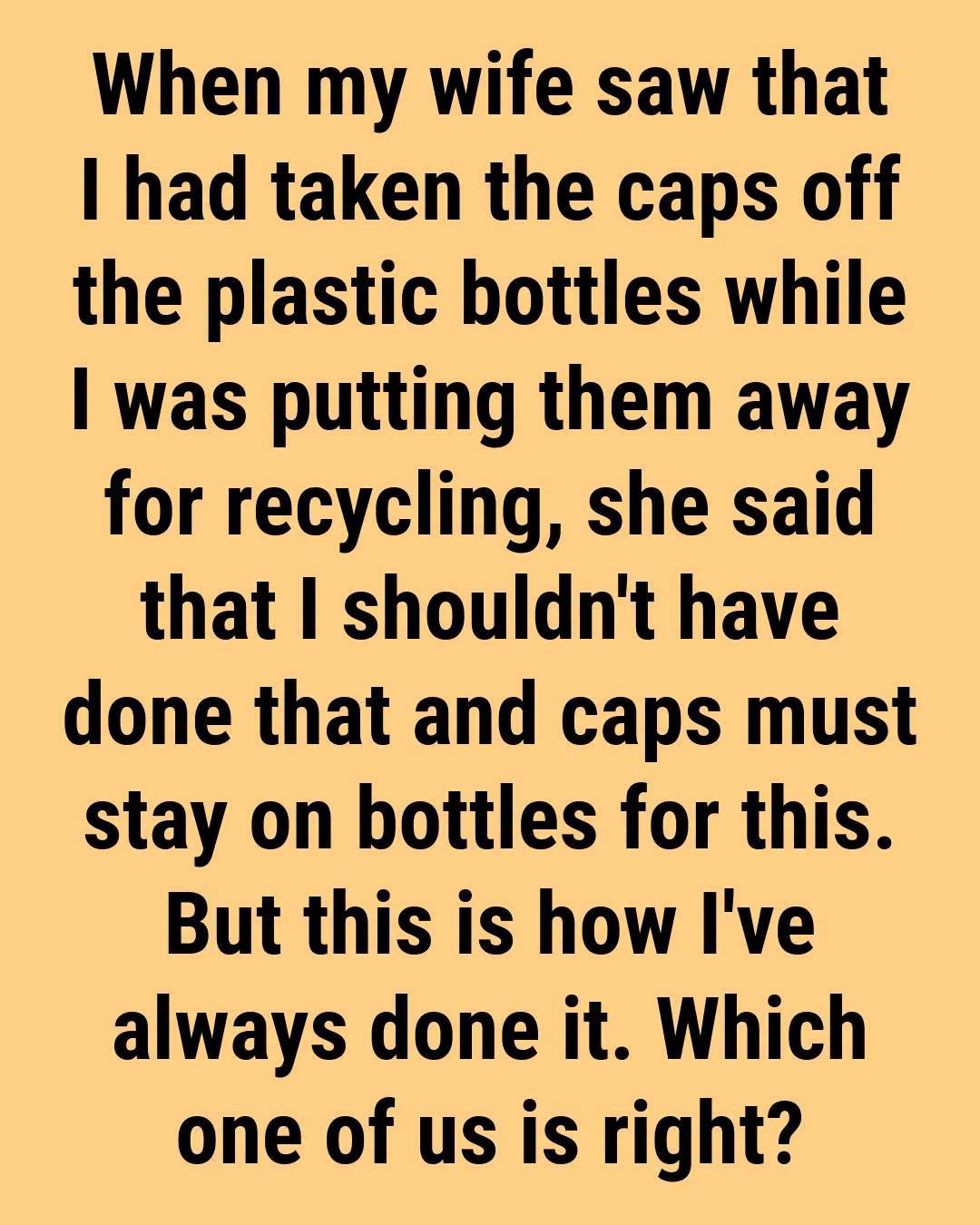

For years, I thought I was doing the right thing by removing the caps from plastic bottles before tossing them into the recycling bin. It seemed logical—after all, the bottle and cap are often made from different types of plastic. Then one day, my wife caught me doing it and insisted that the caps should stay on the bottles. That started a surprisingly passionate debate in our kitchen.
As it turns out, recycling recommendations have changed over the years. In the past, many recycling programs advised people to remove caps because they were made from different plastics and could interfere with sorting equipment. However, modern recycling facilities have improved significantly, and many now prefer that caps remain attached to empty bottles.
There are a few reasons for this. Loose caps are small and lightweight, making them difficult for sorting machines to capture. When separated, they can fall through equipment and end up in the trash. Attached to a bottle, however, the cap is much more likely to make it through the recycling process.
That said, recycling rules vary depending on where you live. Some local programs still have specific requirements about caps, labels, or certain types of plastic containers. The best approach is to check the guidelines provided by your local recycling service.
In general, though, many recycling experts now recommend emptying the bottle, giving it a quick rinse if necessary, and screwing the cap back on before placing it in the recycling bin.
So if this debate sounds familiar, your wife may have the more up-to-date information. The good news is that both approaches came from people trying to recycle correctly. It’s just that recycling technology and recommendations have evolved over time. Sometimes the best environmental habits are the ones that keep changing as the system improves.