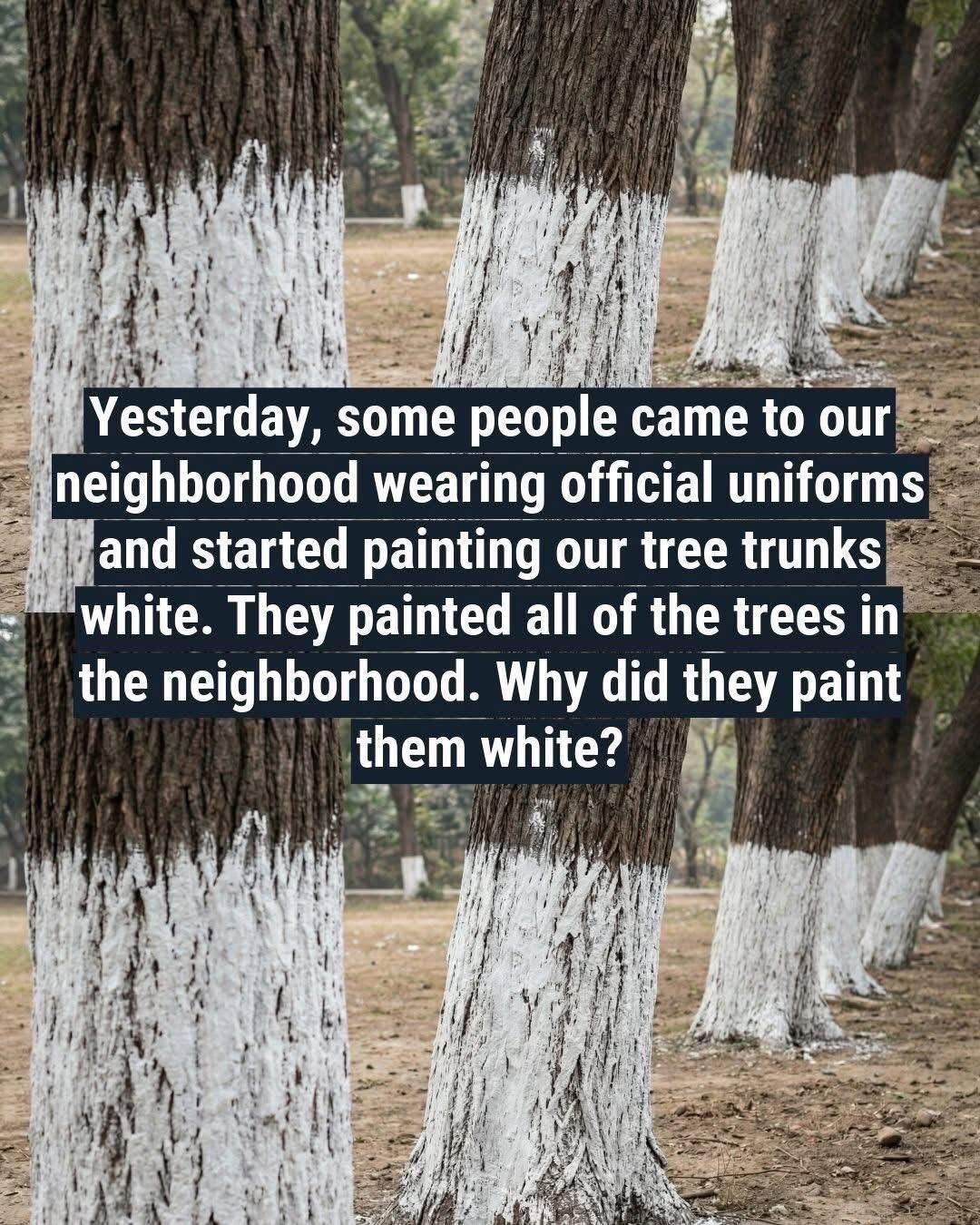
Drivers Are Just Now Discovering the Surprising Reason Tree Trunks Are Painted White Every Winter—and the Hidden Threat It Helps Prevent

Every winter, many people notice trees with white-painted trunks and assume it is decorative or used for identification. In reality, it is a practical method used by arborists and orchard owners to protect trees from winter damage.
The main purpose of the white paint is to prevent a condition called sunscald. This happens when winter sunlight warms one side of a tree trunk during the day, causing the bark to expand slightly. When temperatures drop sharply at night, the bark cools too quickly, leading to stress and cracking. Repeated cycles of warming and freezing can cause vertical splits in the trunk and long-term damage.
Young trees are especially vulnerable because their bark is thinner and less protective. Fruit trees such as apple, peach, and cherry are commonly treated because sunscald can reduce their health and future yield. Even ornamental trees can be affected under the right conditions.
The solution is surprisingly simple. A thin layer of white water-based latex paint is applied to the lower trunk. The light color reflects sunlight instead of absorbing it, keeping the bark temperature more stable throughout the day and night. This reduces the risk of cracking and injury during winter temperature swings.
Tree wraps are also sometimes used, but paint is often preferred because it is inexpensive and long-lasting. The goal is not decoration but protection.
What makes the practice interesting is that it often goes unnoticed. Healthy trees in spring mean the prevention worked, even if people never realized anything was happening.
So those white trunks are not random or artistic. They are a quiet form of protection—simple, low-cost, and surprisingly effective at helping trees survive the harsh effects of winter.

