The woman handed me a thick envelope with my name written across the front. Inside were dozens of photographs, newspaper clippings, and a letter she had carried for years.
She explained that her teenage son had once dreamed of becoming a musician. He played guitar constantly and had planned to attend the same music school she later paid for me to attend. But he never got the chance. After losing him, she began walking through the park every evening because sitting at home with the silence felt unbearable.
That was where she first heard me play.
She said I reminded her of the hopeful boy her son had been. At first, she only stopped to listen. Then she learned from a park worker that I had nowhere stable to live and no family supporting me. Paying my tuition became her way of giving another young musician the opportunity her son had lost.
At the bottom of the envelope was his guitar pick, engraved with the words, “Keep playing.”
She had saved it for the day she knew I no longer needed rescuing—only a reminder of how far I had come.
I invited her onto the stage that night and told the audience she was the reason I was standing there. Then I played the first song I had ever performed in the park.
She cried through the entire song.
I had always believed one stranger had changed my future. Only then did I understand that, in a small way, helping me had also helped her survive the past.

Related Posts

The Property Line Turned Her Complaint Against Her
The inspector walked along my neighbor’s side yard, then stopped beside the large wooden shed she had installed only weeks earlier. He measured from the structure to…
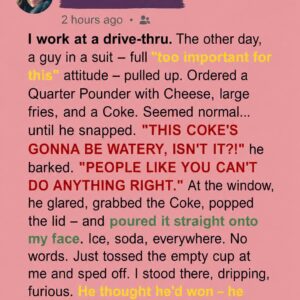
The Man Who Threw Soda at Me Regretted It Hours Later
That evening, I was still furious when my manager called me into the office. I expected paperwork about the incident. Instead, he turned his computer toward me….
The Twenty-Two Calls Changed Who Needed Whom
Warren left with one suitcase and checked into a small hotel across town. The next morning, he called his attorney. The deed was still entirely in Warren’s…
The Payments Stopped Before Their Anger Did
By midnight, Gwendolyn had made a list separating what she legally owed from what she had simply been paying out of habit. She did not cancel anything…
The Security Footage Destroyed Kayla’s Story
The video showed Kayla pushing the cart through the automatic doors. Then she stopped. She turned around. Through the glass, Sophie was clearly visible beside the blue…
The Briefcase Ended Their Inheritance Grab
The man in the gray suit stepped forward. “Whit Coleman,” he said. “I was Warren’s attorney.” Bethany’s face tightened. Whit opened the briefcase and removed a thick…